When Congress created Opportunity Zones (OZs) in 2017, the goal was to channel capital gains into designated census tracts that had historically lacked investment, aligning wealth creation with economic growth in distressed communities by offering tax incentives through Qualified Opportunity Funds (QOFs). Legislators wanted to incentivize capital to flow into low-income census tracts by offering these substantial tax breaks, creating a “frictionless” structure that would connect investors with underserved neighborhoods.
The hope was simple but powerful: spur economic growth and job creation in communities that needed it most.
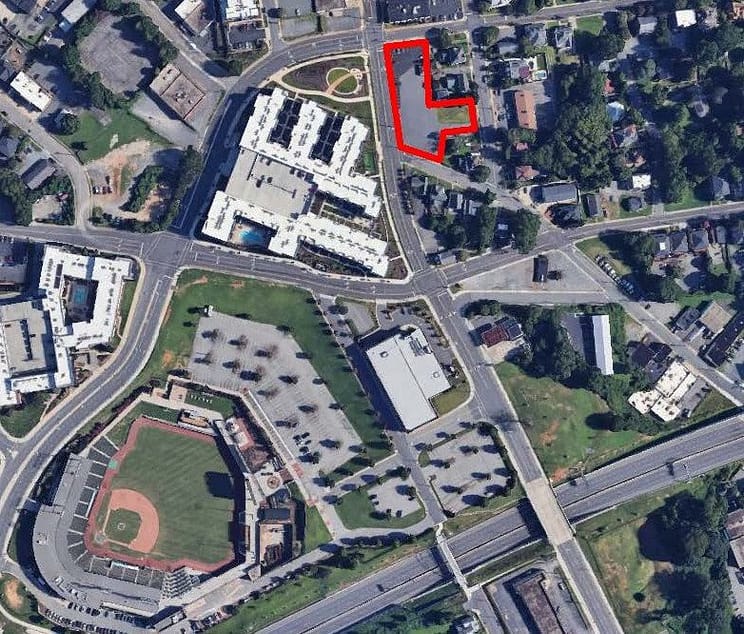
This land at Spring and Broad Streets in Winston-Salem, located in an Opportunity Zone, is close to the Truist Baseball Stadium.
What Really Happened
1. Where Investments Did Not Flow
- Very little capital reached operating businesses - one of the program's core goals.
- Less than 10% of total OZ dollars went into businesses that directly generated jobs.
- A survey of Qualified Opportunity Funds (QOFs) found that only around 5% of funds supported operating business.
2. Where Investments Did Flow
- Over 90-95% of OZ capital went into real estate projects, not businesses.
- Roughly 70–80% of OZ real estate capital flowed into census tracts that were already attracting investment before the program launched.
- Example: In downtown Winston-Salem, over $1.5 billion was invested in the core between 2000 and 2017 — well before OZs existed.
3. Why the Program Fell Short
- Poor Targeting of Communities: Governors often designated tracts that were already gentrifying or located near strong downtown markets. Research by Brookings and Urban Institute shows capital disproportionately flowed to “easy win” areas, not the neediest neighborhoods. Some tracts, as one critique put it, “frankly, never should have been opportunity zones.”
- Lack of Transparency & Accountability: A glaring omission in the original law was the absence of federal reporting requirements. Without tracking, it was impossible to know where the money went, how many jobs were created, or whether residents benefited.
- IRS Guidance & Rules: The IRS was slow to provide clarity, and when it did, the rules for businesses were complex compared to the simpler real estate framework. This discouraged investment in local businesses — the intended job creators.
4. Unintended Consequences
- Gentrification: In some markets, OZ investment was perceived to accelerate rising rents and property values without parallel affordable housing or workforce strategies.
- Luxury Development: OZs were sometimes used as a tax shelter for luxury projects, rather than a tool for equitable community development.
Why the New Bill (OZ 2.0) Is Better
Recent reforms strengthen the framework and better align OZs with their original purpose:
- Refocuses incentives on the neediest tracts.
- Provides stronger support for operating businesses, not just real estate.
- Adds equity tools like rural bonuses and Community Benefit Agreements.
- Locks in permanence with flexibility via redesignations every 10 years.
- Strengthens long-term tax benefits to encourage patient, stable capital.
- Introduces real reporting requirements and a public transparency portal.
Local Outlook: Winston-Salem & the Triad
As OZ 2.0 takes shape, there will be new opportunities in 2027 for Winston-Salem and the broader Triad region. Investors who plan now will be best positioned to align with the redesigned program.
Thinking about Opportunity Zone investing in Winston-Salem or the Triad? Christopher Commercial can help you evaluate opportunities and design a strategy tailored to the new framework.

Coming Up Next
Stay tuned for our next blog in this series:
“Brain Drain & Brain Gain – How Cities Cope with These Challenges.”
Questions about Opportunity Zones? Reach out to us today:
Jared Rogers | Broker | 336.310.5915 | jared@christophercommercialnc.com


0 Comments