For years, Opportunity Zones (OZs) were treated as a trial program: a set of tax breaks designed to lure investment into struggling communities. That era is over. The One Big Beautiful Bill Act (OBBBA) has turned the OZ incentive into a permanent feature of the U.S. tax code. Most of the changes take effect on January 1, 2027.
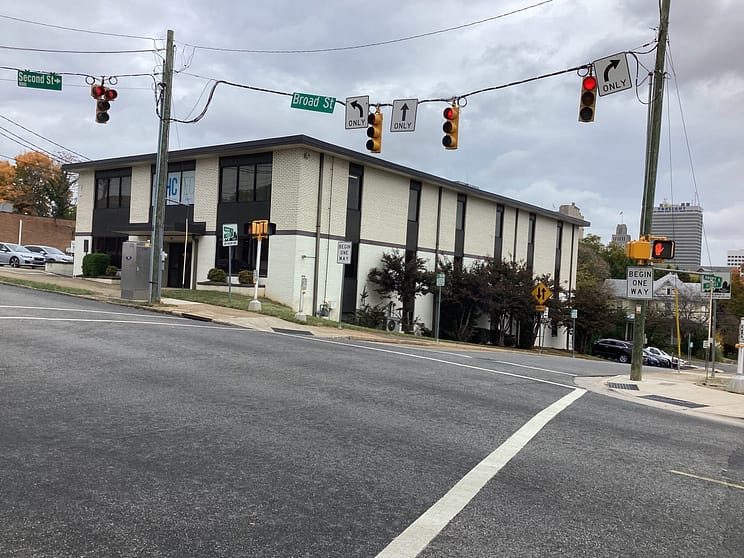
201 Broad Street in Winston-Salem, NC is located in an Opportunity Zone
What’s New Under OZ 2.0
- Permanence and Redesignation
- OZs are now permanent.
- Every 10 years, governors will redraw the map of eligible census tracts, starting in July 2026. Current maps phase out at the end of 2028.
- Smaller, Stricter Map
- Expect about a 20% cut in designated areas.
- The new map will tilt more heavily toward “the neediest communities.”
- Simplified Investor Incentives
- Deferral: Investors can defer capital gains tax for five years — a rolling window that resets with each new investment.
- Step-Up: After five years, investors get a 10% basis step-up
- 10-Year Rule: Gains on investments held for at least 10 years remain completely tax-free — and no depreciation recapture applies. This is one of the most powerful features of the old and new program.
- 30-Year Cap: After 30 years, the investment’s value is “frozen” for tax purposes, so additional gains beyond that point will be taxed.
- Rural Priority
- Qualified Rural Opportunity Funds (QROFs): A new category. Investors in rural OZs get a 30% basis step-up after five years, triple the standard benefit.
- Lower Improvement Requirement: In rural OZs, you only need to improve a property by 50% of its value (instead of doubling it).
- Translation: Rural projects become easier to finance and more attractive to investors.
What Didn’t Make It Into the Bill
- Capital Gains Only: OZs still exclude ordinary income.
- Operating Businesses: No new support for non-real estate businesses.
- Affordable Housing: No special incentives for residential or affordable housing were added.
Why This Matters for Developers
- Predictability: With permanence, OZs can now be part of long-range development strategy.
- Rural Advantage: Developers working outside major cities will find OZ capital easier to attract.
- Discipline Required: OZs amplify good deals — they do not rescue bad ones.
Bottom Line
Opportunity Zones have grown up. What began as a temporary tax experiment is now a permanent fixture of U.S. development policy. For developers and investors, the combination of long-term certainty, simplified rules, and rural incentives makes OZs a sharper tool for structuring deals and attracting capital. As always, careful structuring and professional tax advice are essential.
Thinking about OZ investing in Winston-Salem or the Triad? Christopher Commercial can help evaluate opportunities and design a strategy tailored for the 2027 framework.

Coming Up Next
Stay tuned for our next blog in this series:
"Opportunity Zones 3.0: What Were the Original Goals?"
Questions about Opportunity Zones? Reach out to us today:
Jared Rogers | Broker | 336.310.5915 | jared@christophercommercialnc.com
Service areas: Winston-Salem, Kernersville, High Point, Lewisville, Clemmons


0 Comments